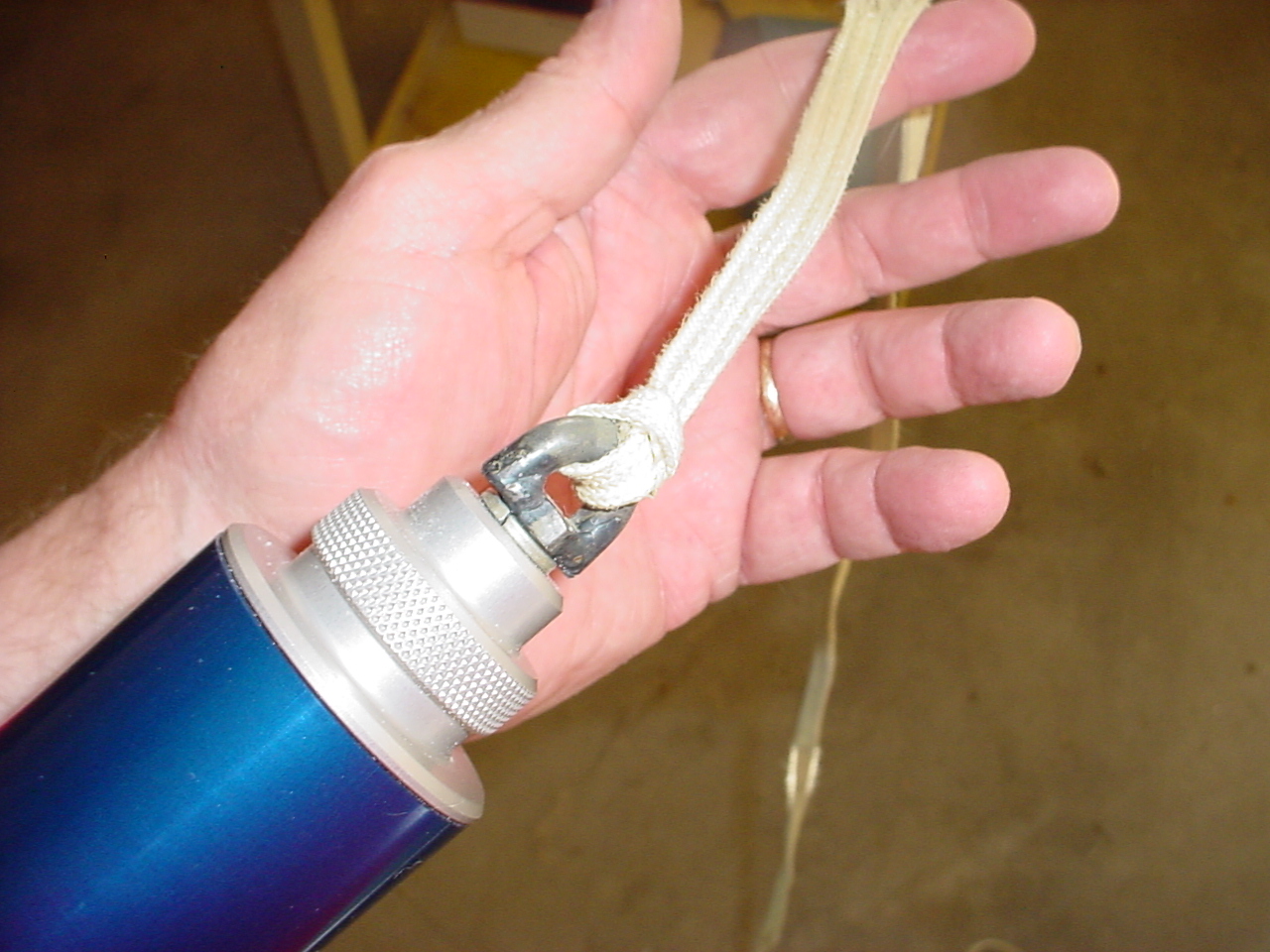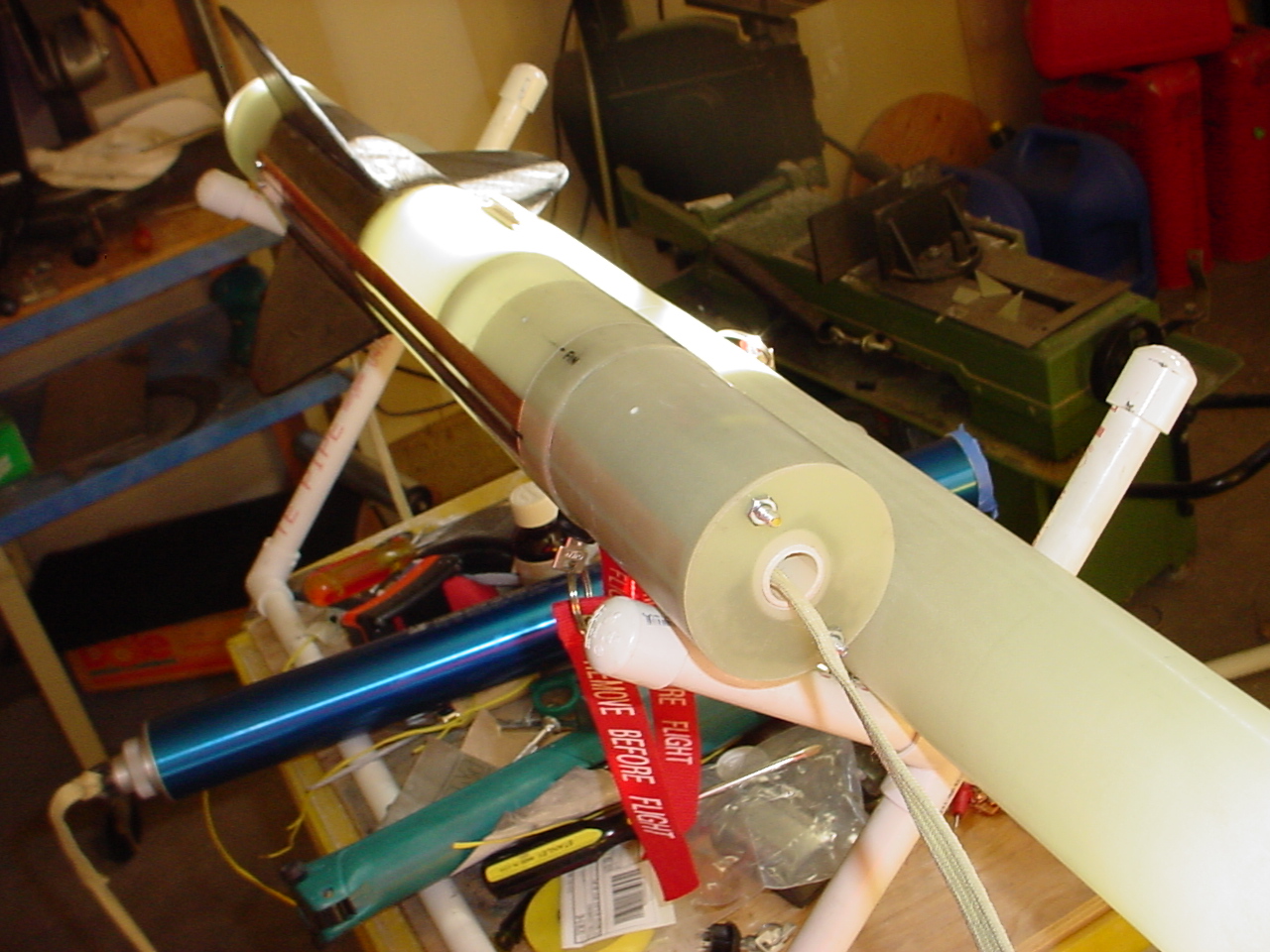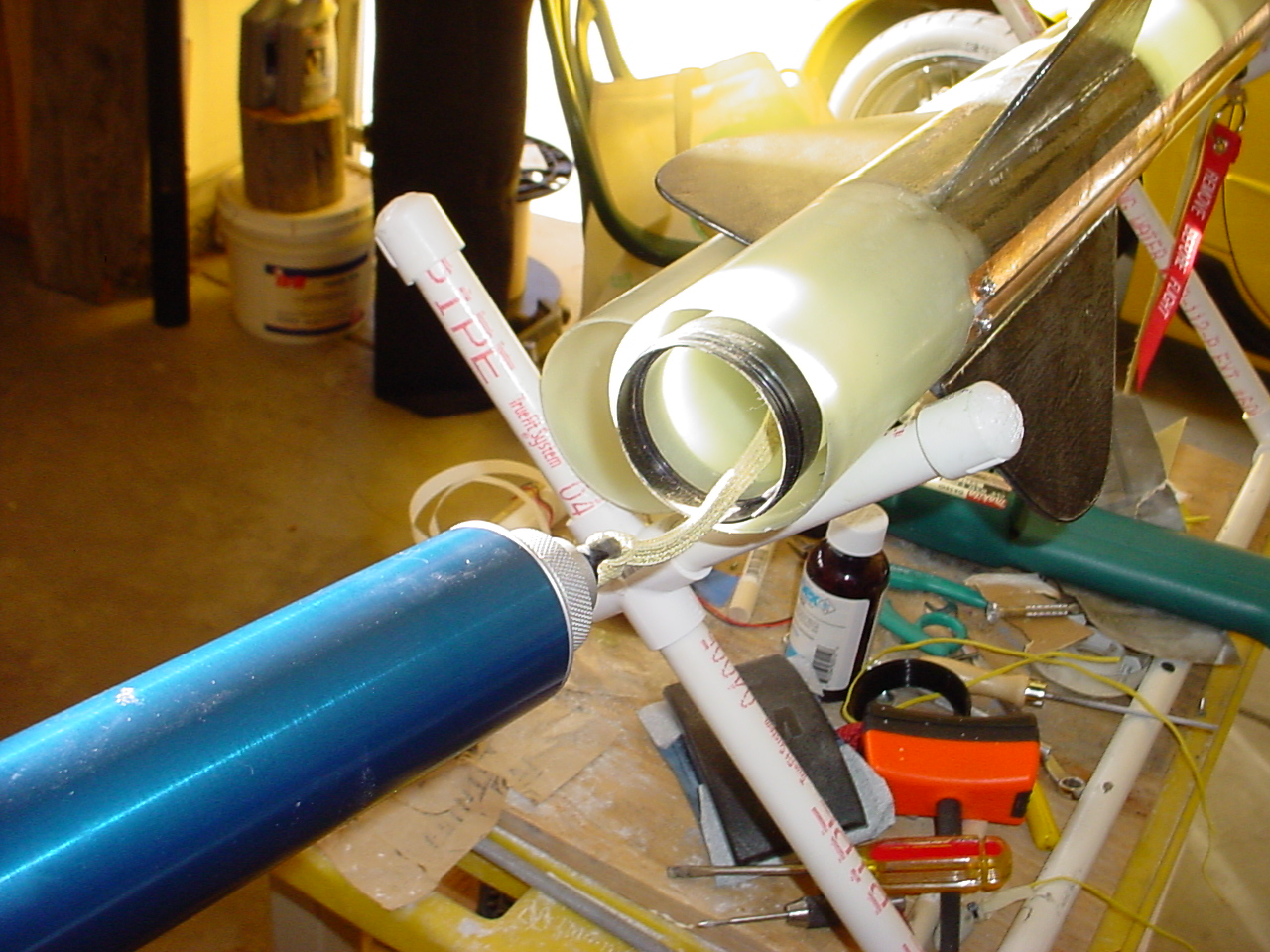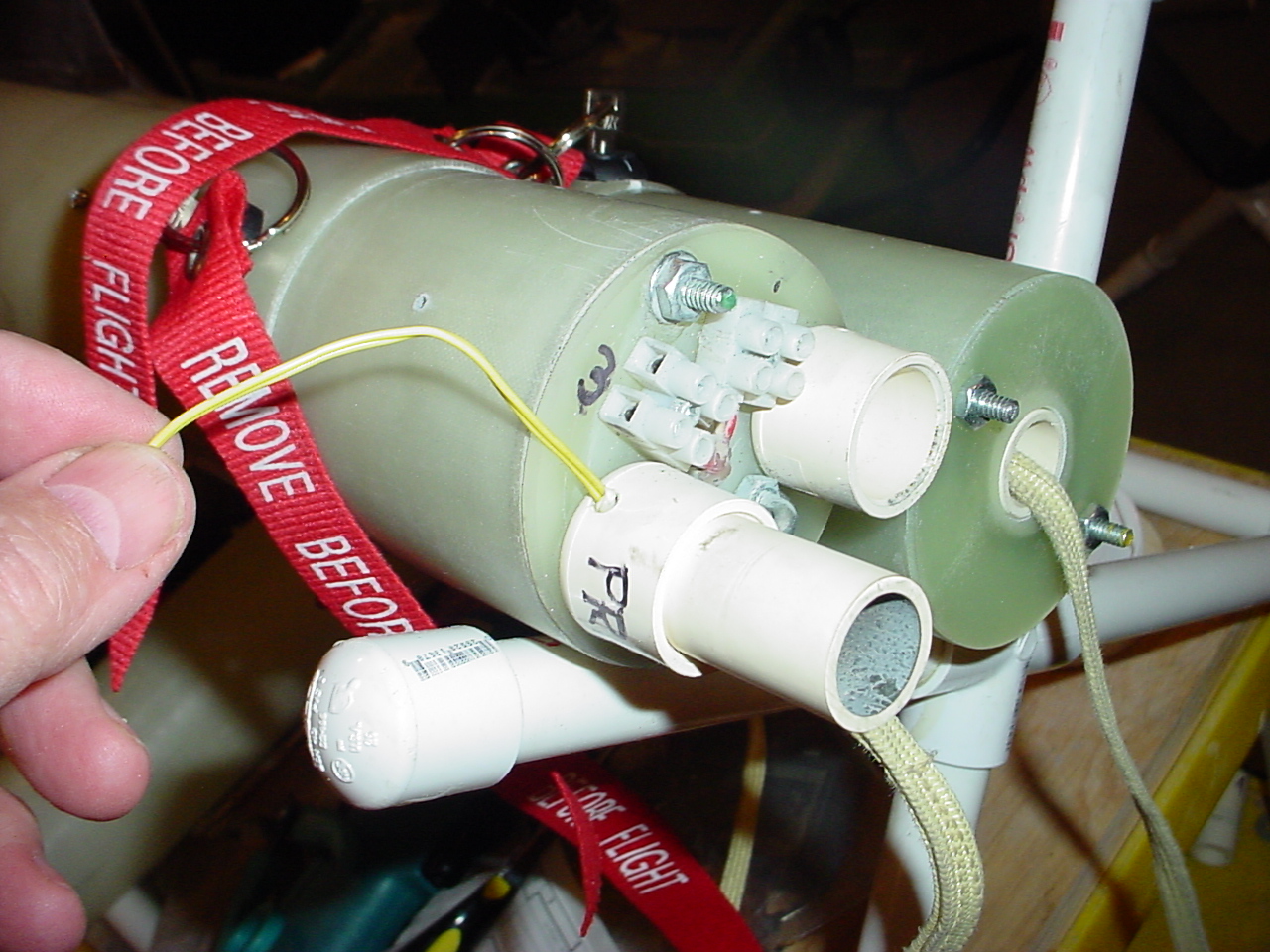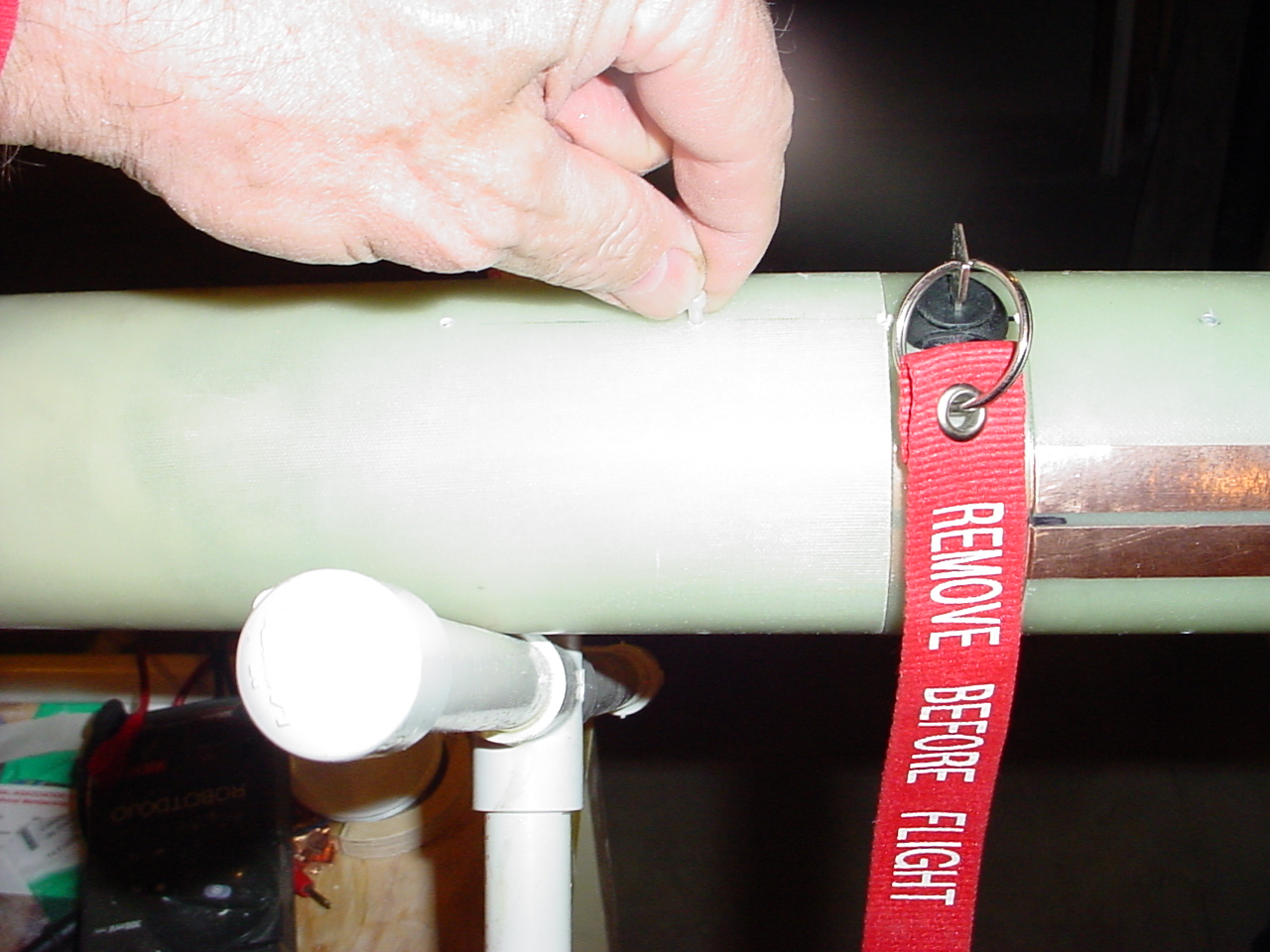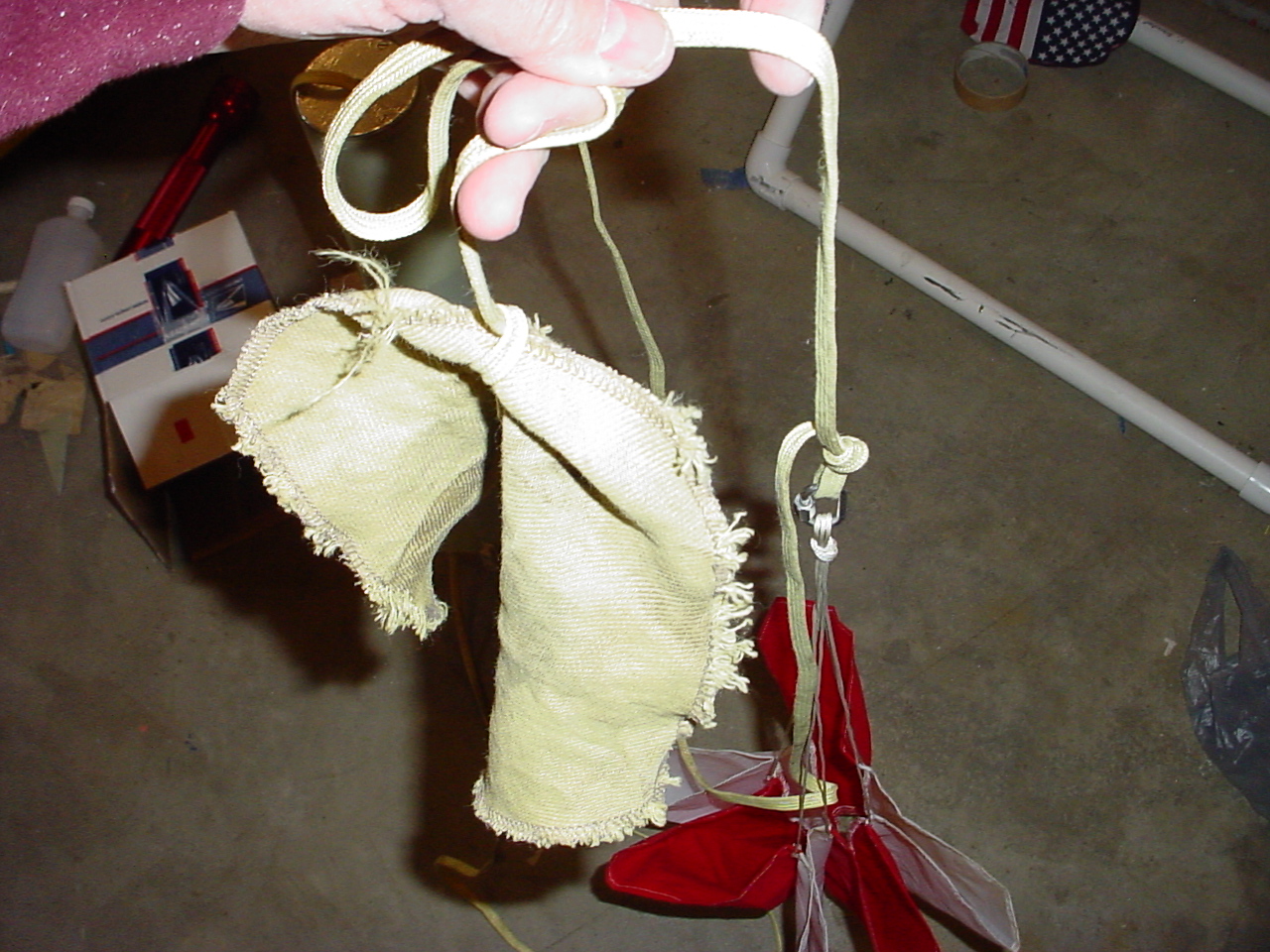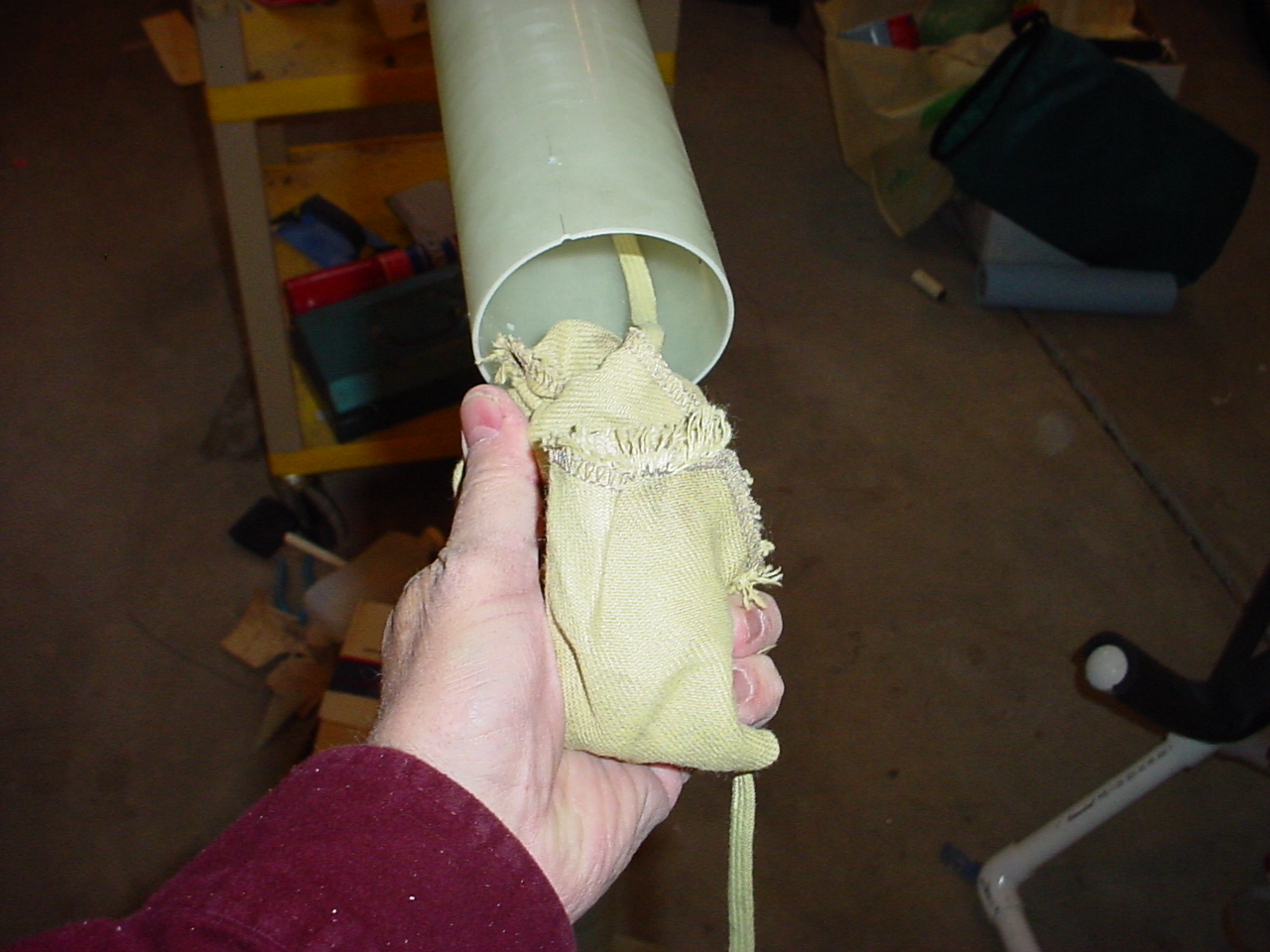
A Two-stage Rocket based on parts from two Performance Rocketry G3 kits with custom ordered modifications. It is a 3" G10 airframe, about 11 feet long, and weighs 16 pounds (without reloads). The 10 lb sustainer (Micky) uses a 54mm K700W motor and the 6 lb booster (Ricky) also uses the same motor. Both sections use 48" Sphere-a-chute's for main deployment recovery. Micky has an additional PML 18" drogue chute for dual deployment. Ricky uses a Missileworks PET2 Timer for separation and an Adept ALTS 60K for apogee deployment. Micky uses another Missileworks PET2 Timer for ignition of the sustainer motor, a Missileworks RRC2X and a RRC2-mini for redundant dual deploy, and a Garmin DC20 dog tracker for recovery. Mach delay's were set at 12 seconds, at least I thought I set them to 12 seconds.
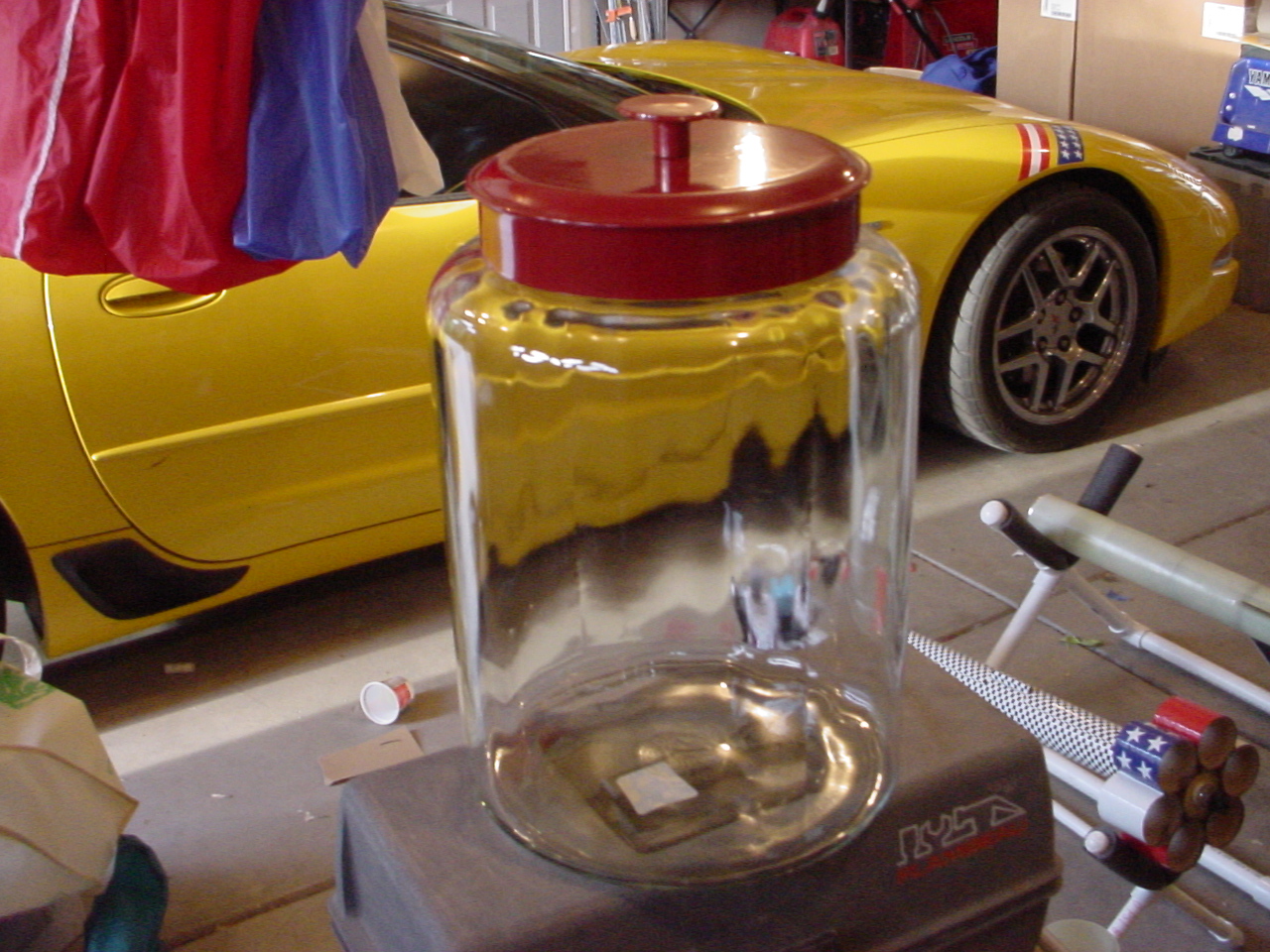
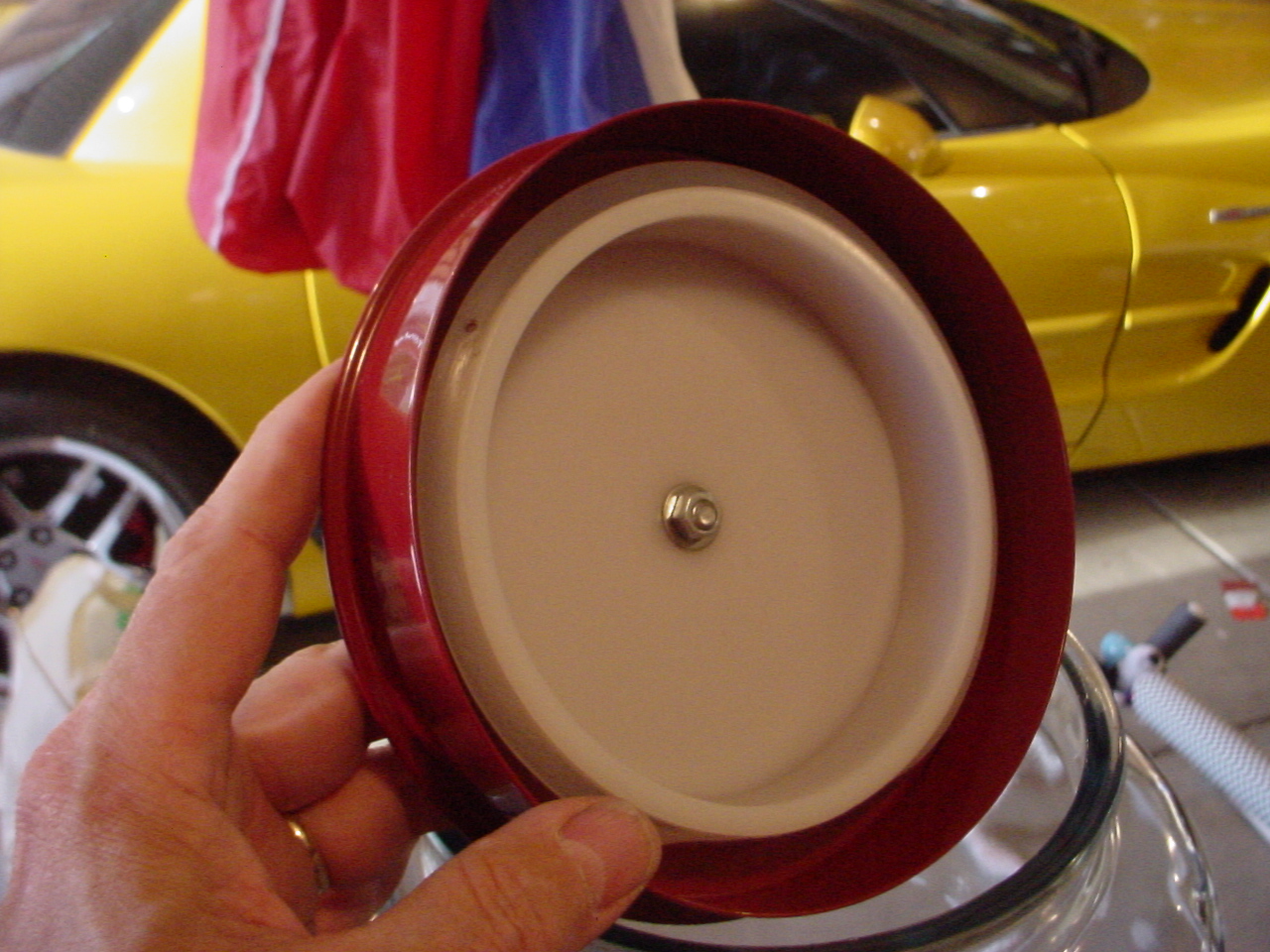
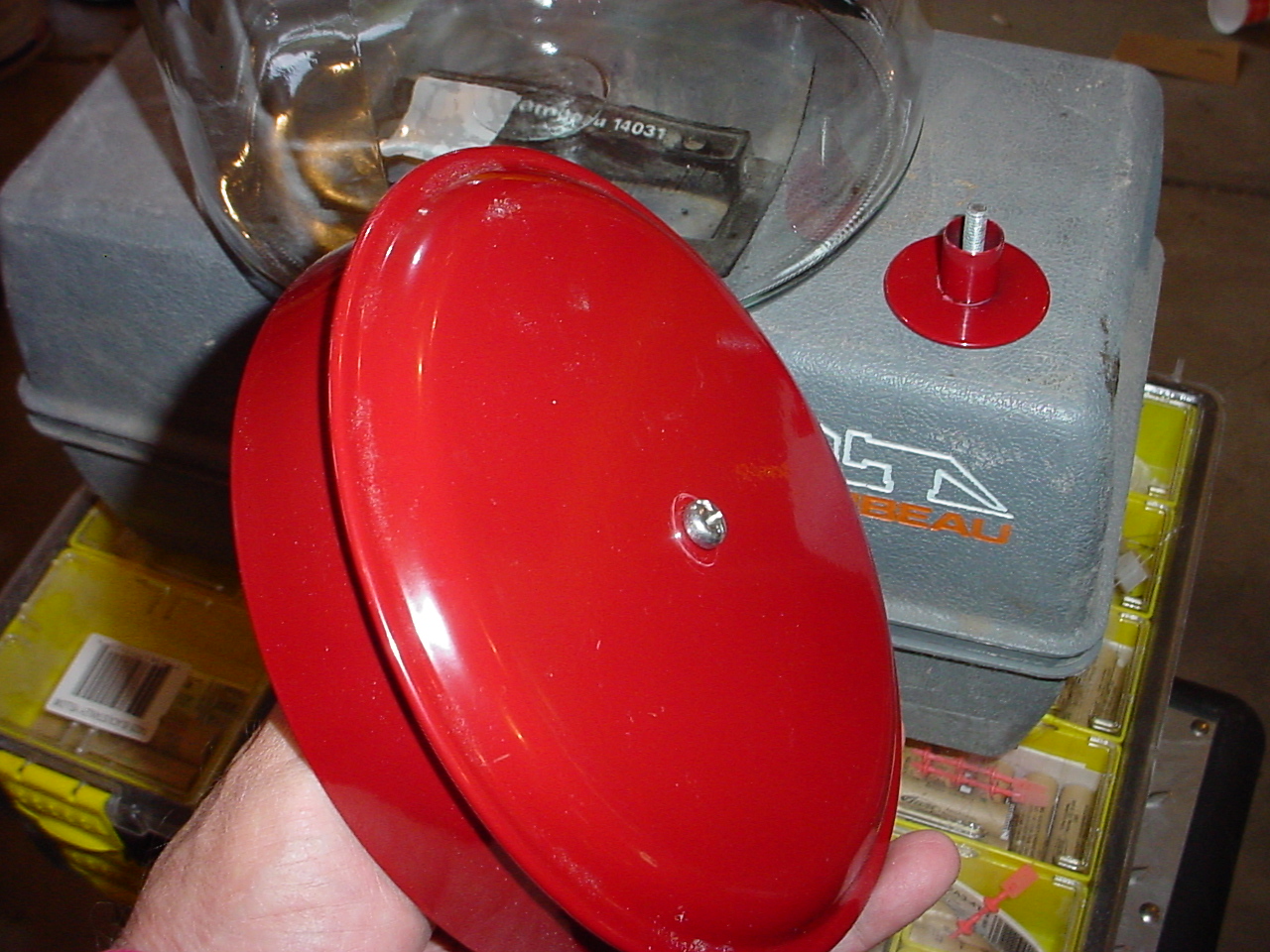
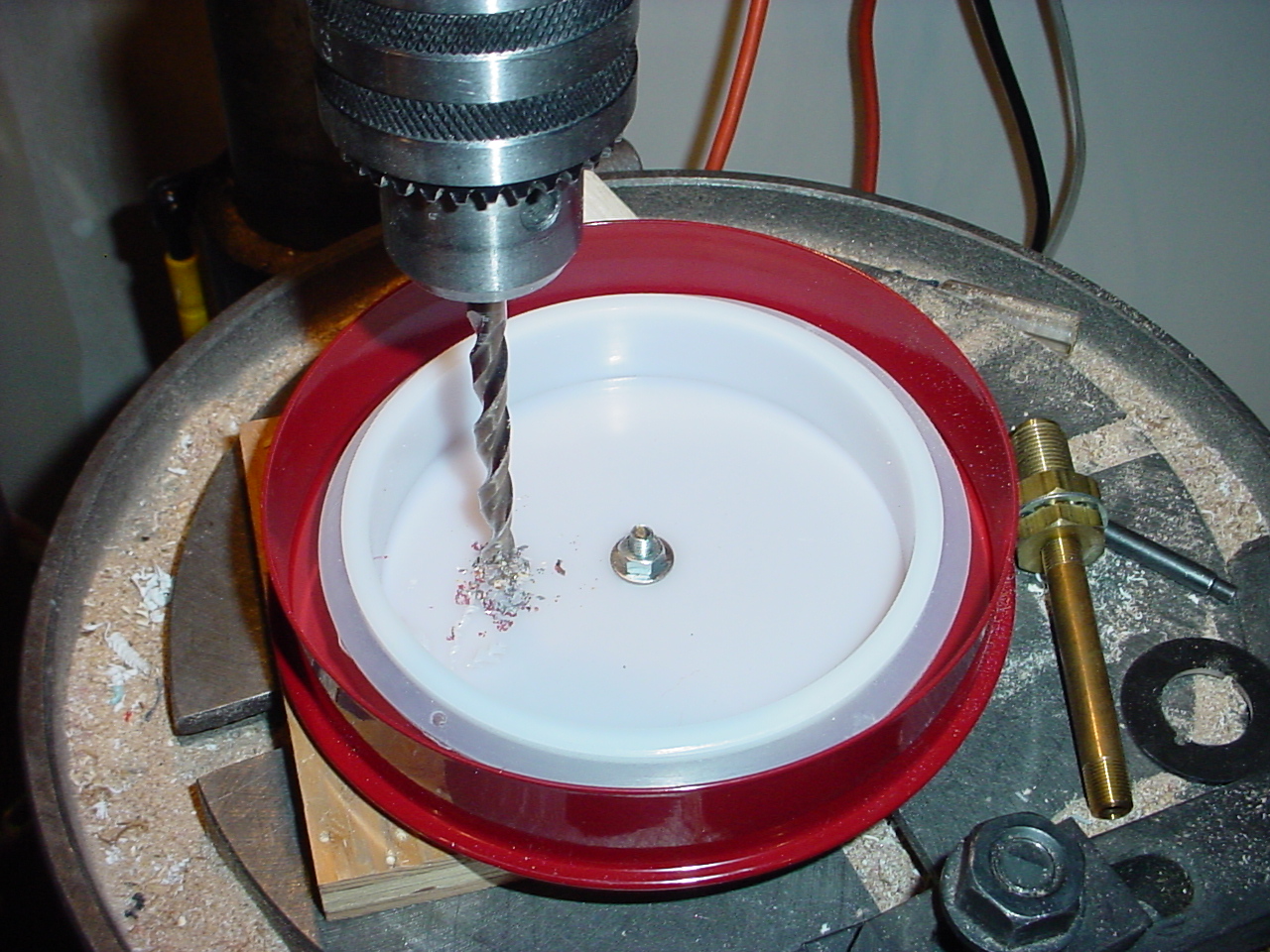
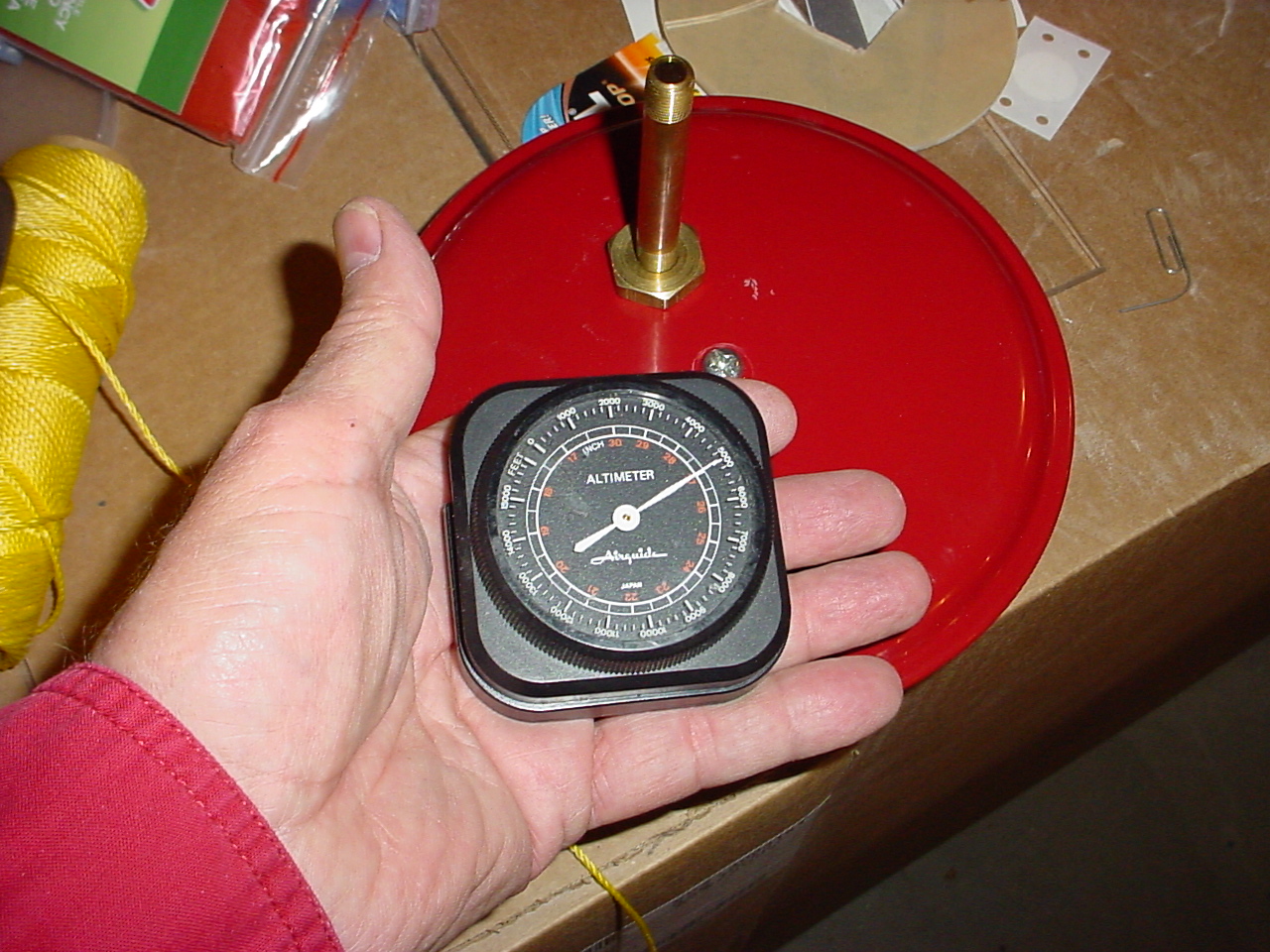
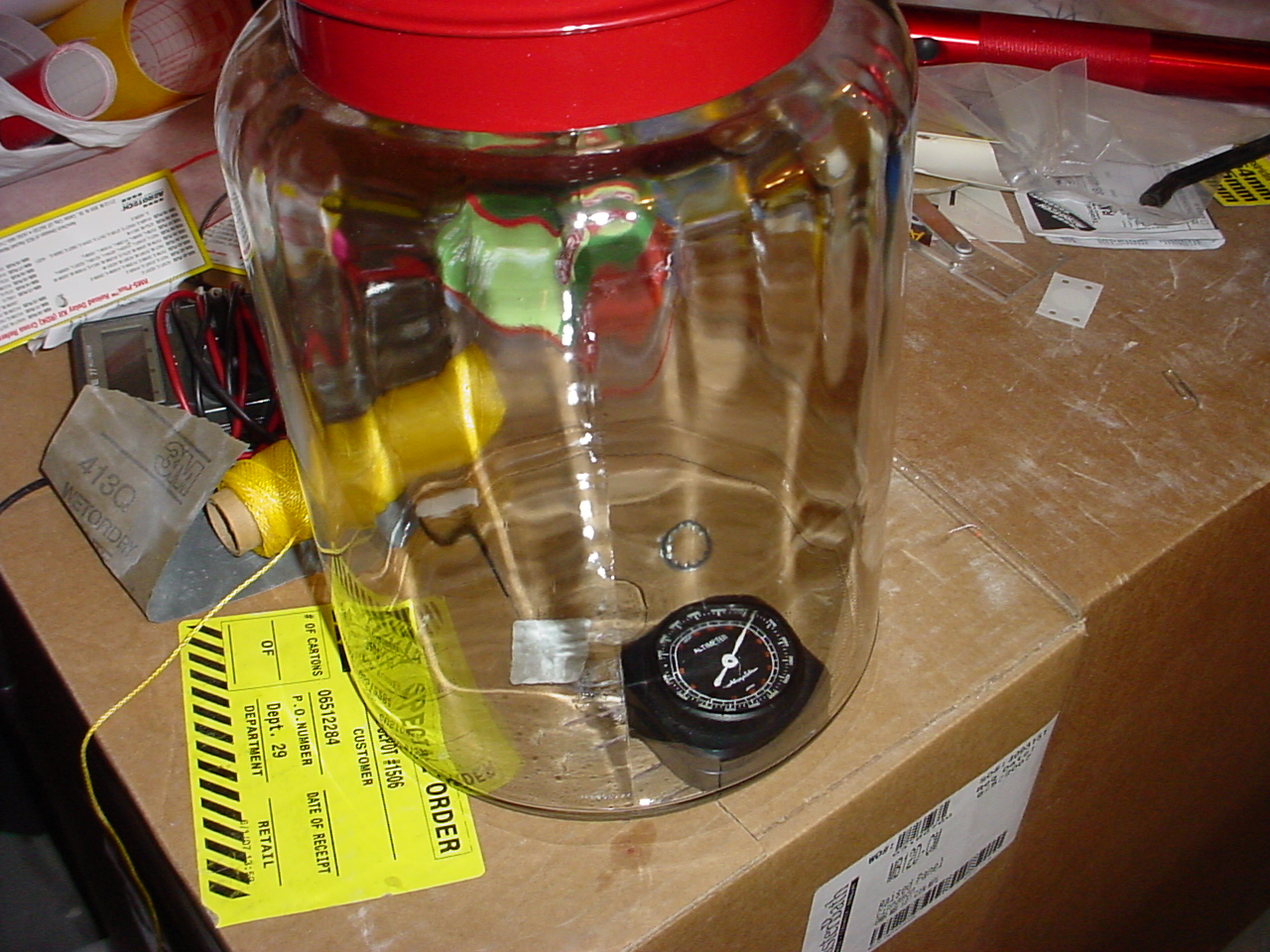
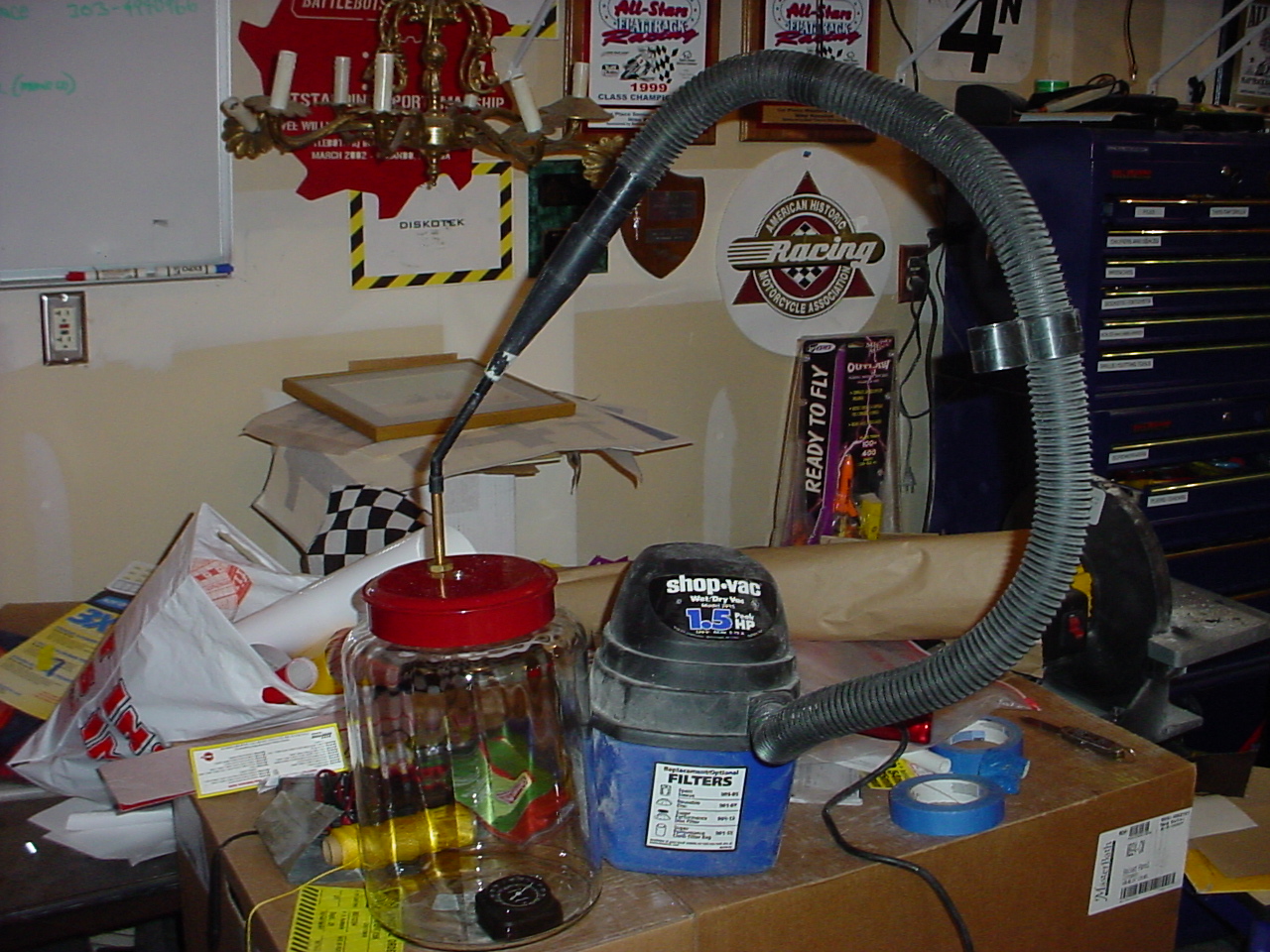
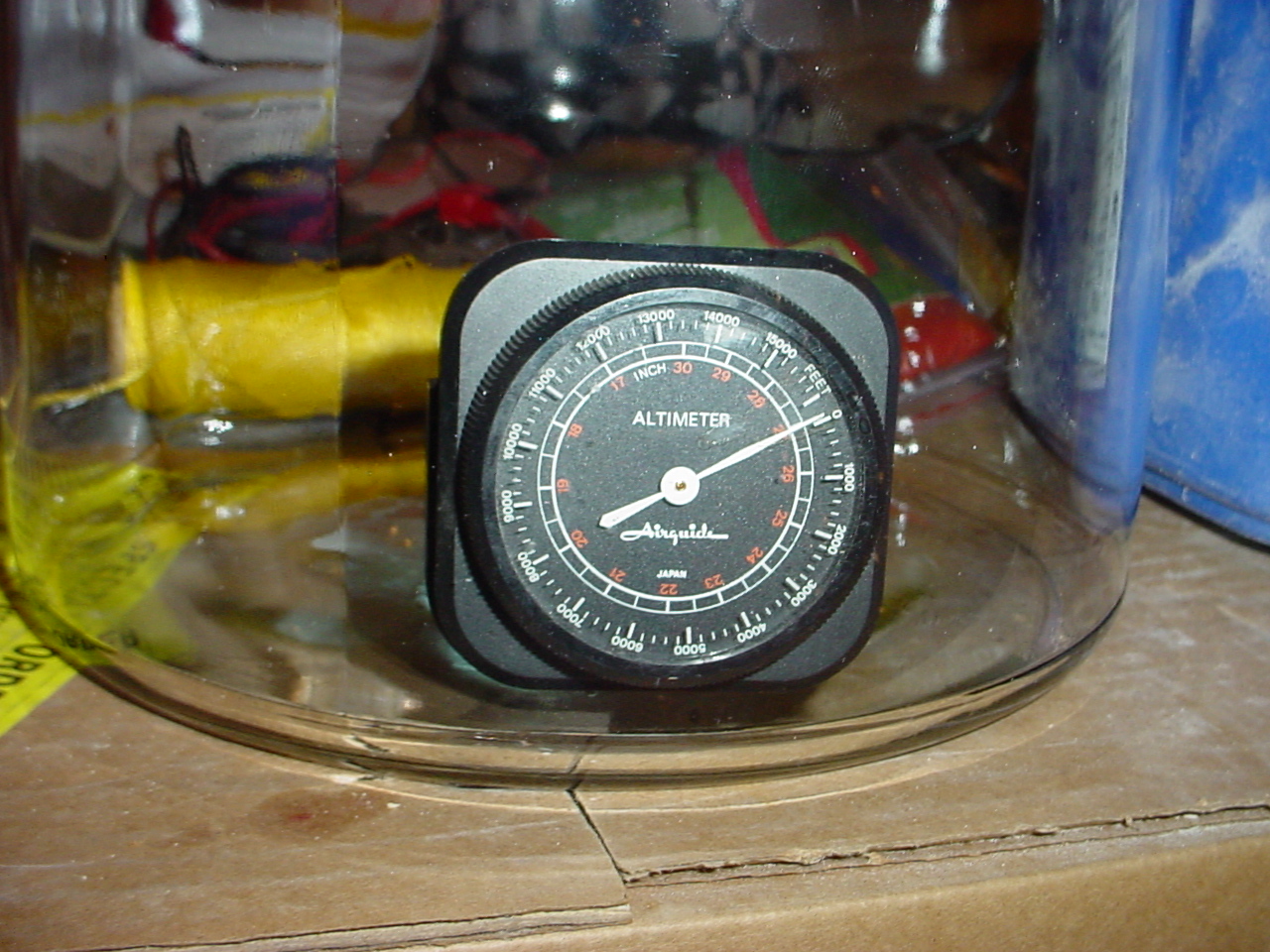
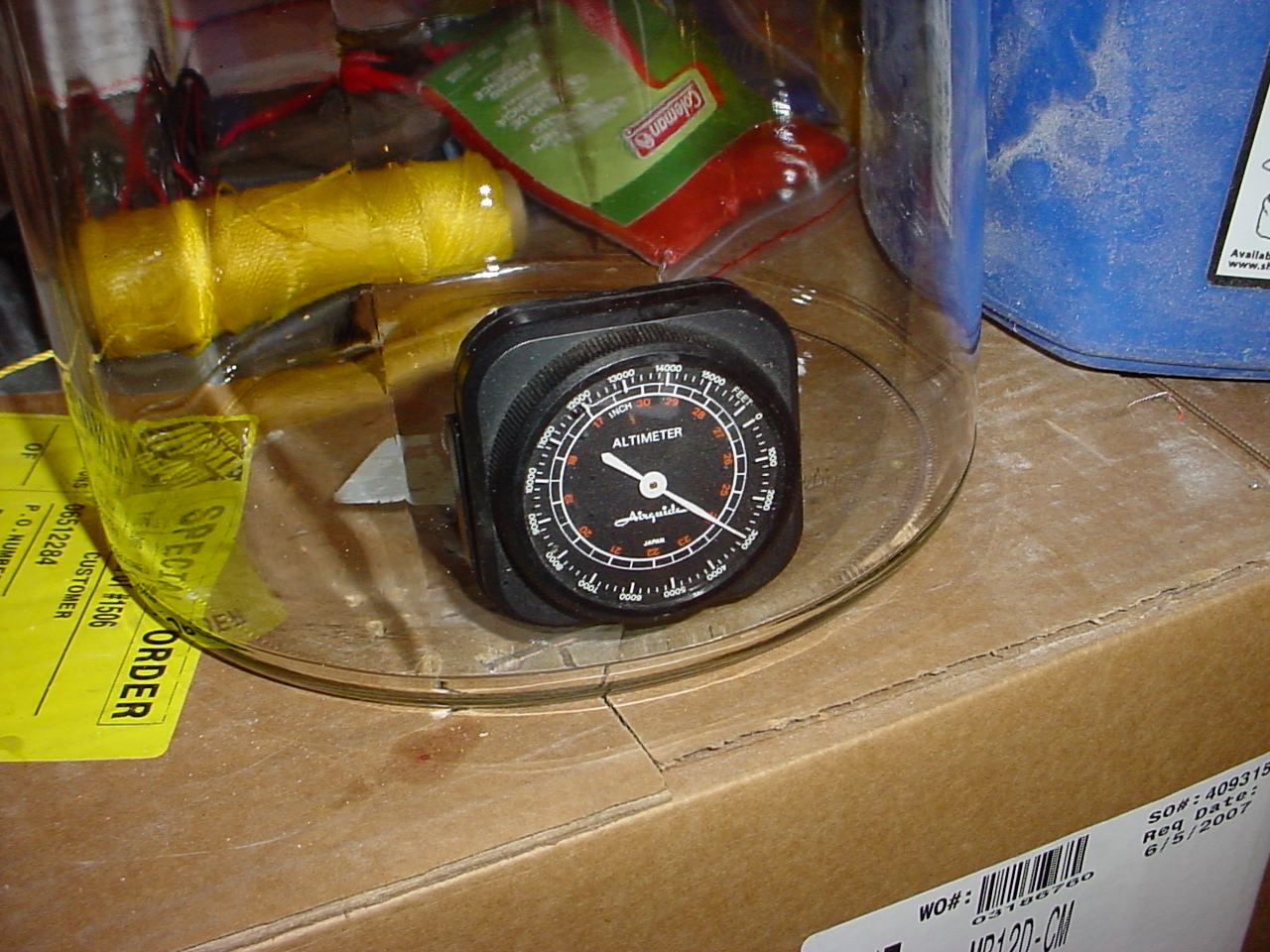
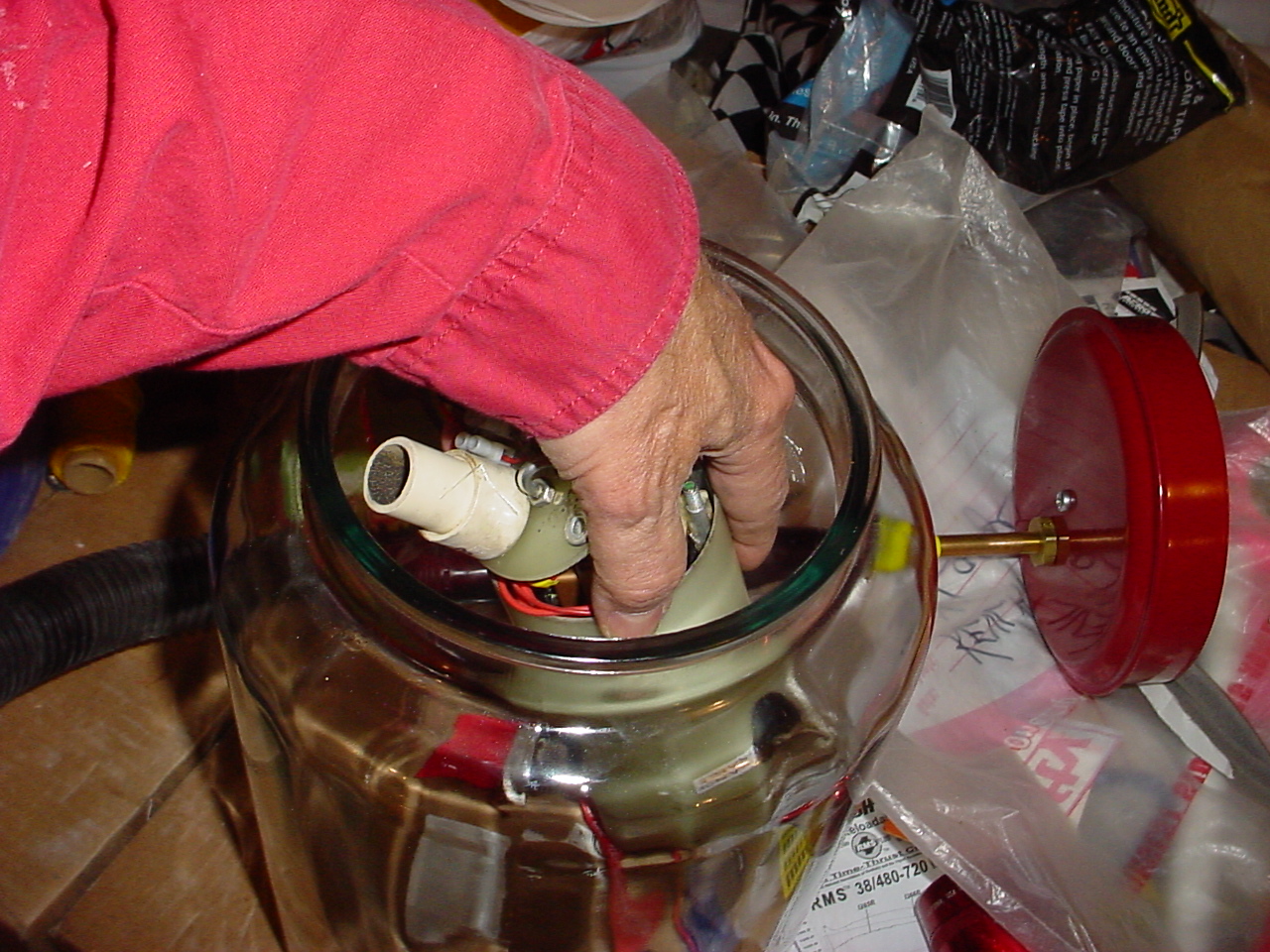
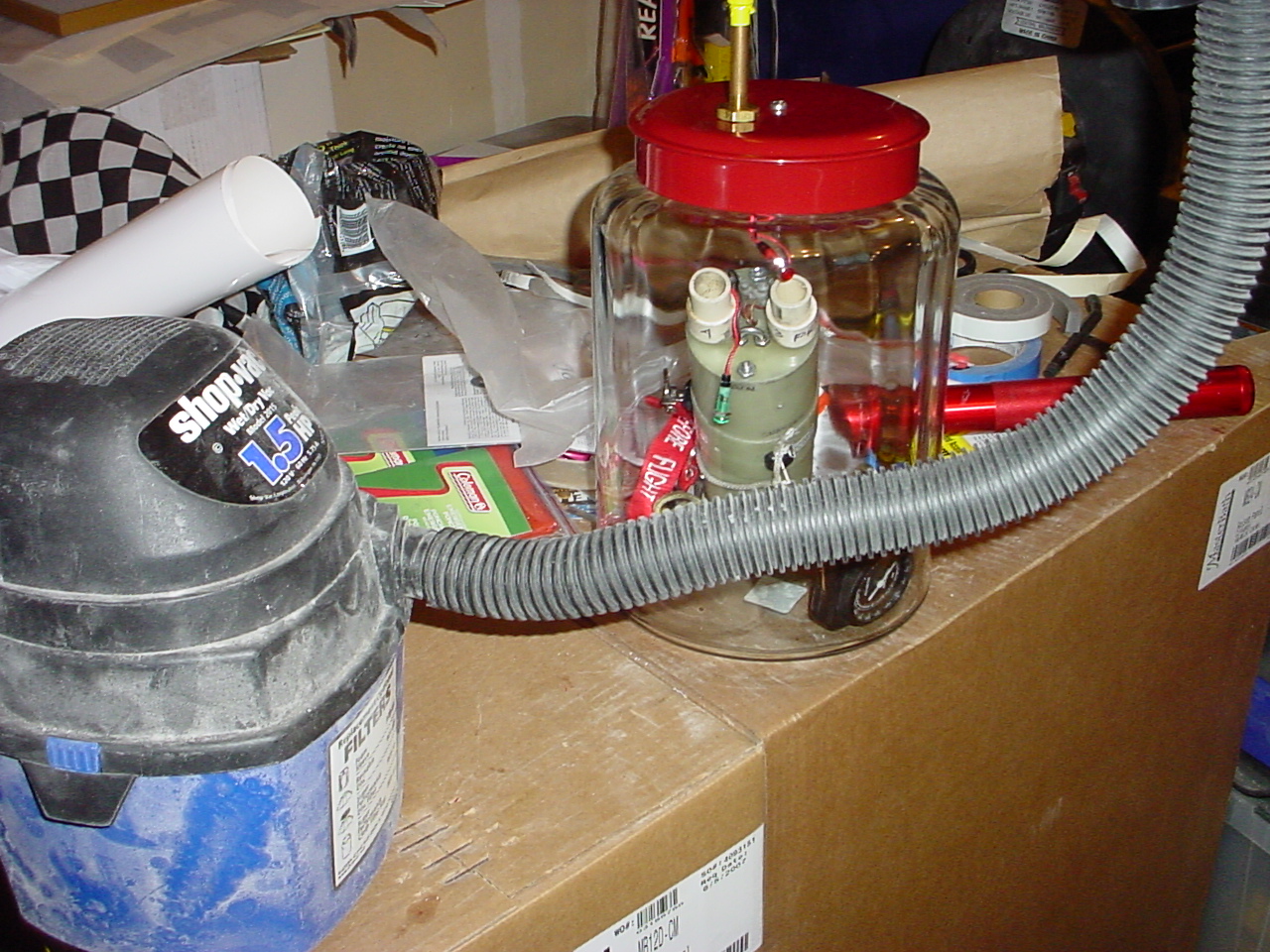
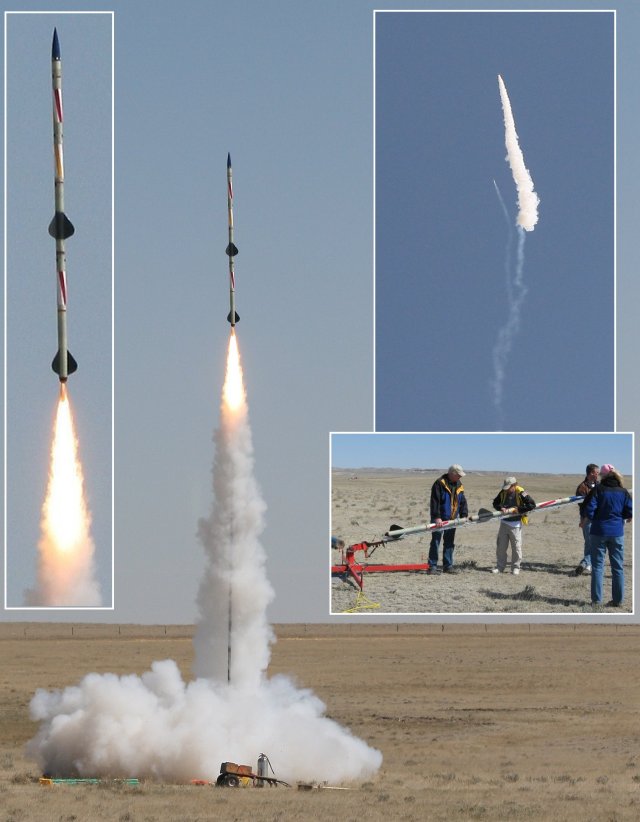
The launch was great and the flight exciting to watch, and from the ground, everything appeared to have worked as planned and in order. After the upper stage ignited and the subsequent individual pieces begin to fall as part of deployment, it became apparant that the fin can to the sustainer was missing. You can see the entire sequence of the events on the right sidebar where I zoomed in on a sequence of still photos (by Ray LaPlance and Bert Harless). The deployment charge on the sustainer's drogue chute occurred while the motor was still thrusting (going through mach). Puzzled as to the rational of the premature sparation (was it too small and too few shear pins?), I built a vacuum chamber out of a 2-1/2 gallon "Montana" jar and connected it to a vacuum cleaner to check out the altimeters. In the process I discovered the the RRC2-mini's mach delay had not been activated at all. The RRC2X is set by dip switches and was correct. the mini is set by a programmed series of button presses by watching a multi-colored led flashing. Evidently, I never set this correctly which caused the failure.
As a rocket rises the external pressure decreases and barometric altimeters look for a change in slope where the pressure starts increasing again which means the rocket is falling. However as a rocket passes through the speed of sound (or mach 1) the shock wave causes a temporary positive pressure increase around the airframe. Mach delays are used to delay the altimeters from 'looking' or reading the pressure changes until the rocket has slowed down below mach and is coasting toward apogee. Becuase this was not set correctly, the drogue was deployed at a very high speed (over 700 MPH) and the violent sparation ripped the shock cord apart. Most of the rocket came back intact, ready to fly again, but the fin can is still missing. Several NCR (Northern Colorado Rocketry) members have searched but the area needed to be broadened.
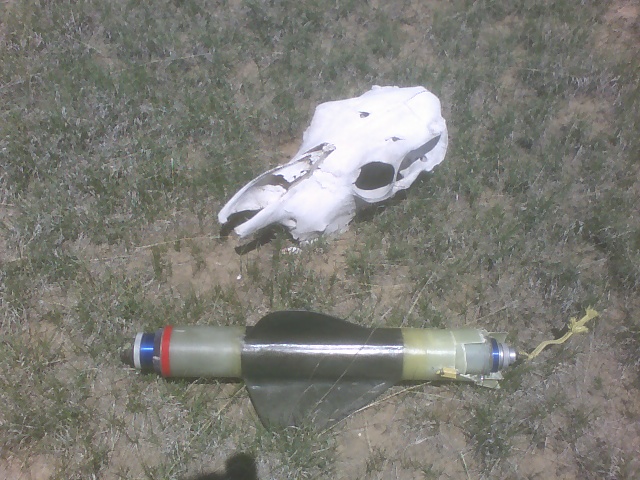
Update - June 8, 2009 - Sustainer Fin Can Found
I took advantage of the Sunday after the Pawnee Open (NAR regional Contest), because I didn't have any more rockets to launch, to look for my errant fin can off "The Twins" sustainer. Since I had numerous reports of searches that were up to the fence (1 mile to the east) I started out by parking 3 miles to the west along CR126 and hiked north 1 mile then wandered back toward the launch site. The plan was to be about a quarter mile north of the predicted track I had extended from my DC-20 GPS real track, as there was a north easterly wind that day. Then I would walk to the real track a nd follow it straight out west. My original assumption was the the fin can would maintain its trajectory, given that the momentum would keep it heading in the direction it was going at the time of separation. Assuming it was ballistic, it would have traveled the same distance and arc on the way down that it had on the way up. So the estimated location would have been twice the distance recorded on the onboard DC20 from the launch site to apogee. As it turns out, after walking 3 miles worrying the antelope to death, I crossed the fence just to get to the gps track. I almost didn't do it since others probably went there before, but just to be thorough I went a bit more further to the east. Sure enough within 100 feet of the end of the predicted track, there it was! This was another great example of having a Dc20 onboard to help locate your rocket, or in this case, rocket parts.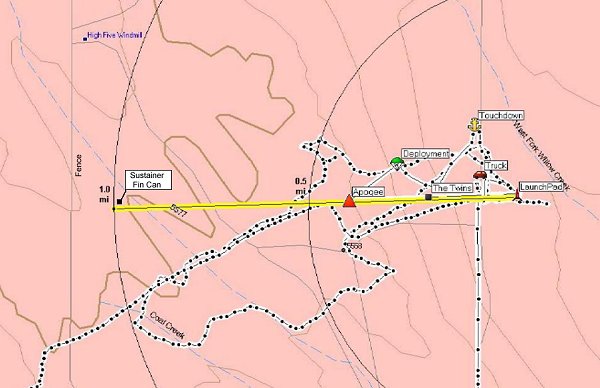


I've ordered new parts to rebuild the sustainer's fin can, but I might be able to salvage the damaged fin can. Hey, maybe I can make a TRIPLETS three stage version????
Specifications/Design Data


Flight Path (and Search)


Pictures by Ray LaPlance